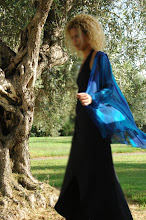
Showing posts with label silk tallit. Show all posts

Sunday, May 16, 2010

Chag Shavuot Sameach!


The day after tomorrow at sundown Am Israel, we at Galilee Silks and Jews around the world celebrate Chag Shavuot the last of the tree main holidays on the Jewish calendar.
On the 50th day after the Israelites left Egypt and were in the wilderness around Mount Sinai, God presented Moses with the Torah, or Ten Commandments. In accepting these, the Israelites became a nation committed to serving God and Shavuot marks the anniversary of this event.

Besides its significance as the day on which the Torah was revealed by God to the Jewish nation at Mount Sinai (which includes the Ten Commandments), Shavuot is also connected to the season of the grain harvest in Israel. In ancient times, the grain harvest lasted seven weeks and was a season of gladness (Jer. 5:24; Deut. 16:9-11; Isa. 9:2). It began with the harvesting of the barley during Passover and ended with the harvesting of the wheat at Shavuot. Shavuot was thus the concluding festival of the grain harvest, just as the eighth day of Sukkot (Tabernacles) was the concluding festival of the fruit harvest. During the existence of the Temple in Jerusalem, an offering of two loaves of bread from the wheat harvest was made on Shavuot.

Symbols

An important symbol of Shavuot is the Bikkurim, or first fruits. This was a basket of gold or silver that contained the first harvest of the Seven Species crops and was carried to the Temple in Jerusalem in a procession accompanied by music. These crops are: barley; dates; figs; grapes; olives; pomegranates; and wheat. Modern versions of the Bikkurim may include other crops now grown in Israel or other Jewish communities around the world. Images of the Ten Commandments inscribed on stones or scrolls representing the Torah are also symbolic of Shavuot.

On the websites of Galilee Silks you'll find many garments and items adorned whith these very same Shavuot symbols - which are naturally wearable all year round.

Have a look in our Fashion store for the T-shirt in the picture which can be obtained with a matching silk vest

Sunday, December 20, 2009

Hannukah miracle


Do Hannukah miracles have to be spectacular? Or can Hannukah miracles be the simple things?

My Hannukah, this year, was a miracle of simple things -- a new Hannukiah (candelabra), family togetherness, continuity, and some simple new winter garments. Aren't those things miracles too?

Galilee Silks offers garments, and accessories that are not simple. Our garments are modern, fashionable, and stylish. An addition to anyones wardrobe.

From indoor winter scarves to indoor tableclothes to woolen talitot -- Galilee Silks offers Jewish silk fashion for your indoor winter life with your family and friends during the cold season. Each or our items in our catalog are indoor miracles!

As always, Galilee Silks continues to offer traditional Jewish -- wedding, bar mitvah, bat mitvah, shabbat, Pesach, and other holiday items used throughout the Jewish year. Please, browse our full catalog, here.

Miracles come in small packages. Galilee Silks is proud to present our miracle traditional and winter items for your family.

Wednesday, December 16, 2009

A Tallit to keep you [spiritually] warm


We found a great blog which explains all about Galilee Silks most popular marketed garment:


The Talit. We especcialy liked the following post about blessing the Tallis


The Jews do not believe in the blessing of their garments and ornaments by their Rabbi, or the Jew’s religious teacher or master. This is significantly different from other religions, particularly Catholicism, which practices the blessing of items, from those related to their religious practice (such as the Bible) to other items and material possessions. This applies to the use of their tallit or their prayer shawl. The tallitot are not blessed by the Rabbi, although Jews can get such prayer shawls at the synagogue before praying. Because of this, one can buy tallilot anywhere.
However, the Jews do believe that they themselves should bless their tallits. This is a form of their respect to this sacred garment. This practice is actually included in their mitzvah, hence the importance they place on the prayer shawl. Although it is the tzitzit (or the fringes on the prayer shawl) and not the tallit that the Jews are required to wear, it still plays a pivotal role in their religious practice. So it is not surprising that the Jews take the effort to say a prayer or a blessing before wearing the tallit or the prayer shawl.
The blessings are done every time one uses the tallit. First, one takes his or her tallit from the tallit bag, unfolds the prayer shawl carefully, and recites a blessing, which, in essence, acknowledges God who sanctifies His people with the commandments and commands them regarding the use of the tzitzit. After which, one puts the tallit or the tallis on and recites a prayer similar to the first one, although it cites the commandment of wrapping one’s selves in the tzitzit. The second prayer is written on the atarah of the tallit or tallis.
After the tallit has been worn and the prayer has been said, one should then kiss the atarah’s end (or where the last word of the said prayer is embroidered). He or she then kisses the beginning of the atarah (or where the first word of the prater is embroidered). The individual should then wrap the prayer shawl around his or her shoulders, holding the tallit over the head for a brief moment of meditation. At this point, praying a verse of the book of Psalms can be done, although this is not required.
There are a number of rules regarding the reciting of prayer after wearing the tallit. If the person removes a particular tallit and uses a new one, he is required to say the blessing again. The same applies when the person removes the tallit without the intention of praying and using the tallit again. However, if he or she removes it with the intention of putting it back on, this individual can wear the tallit without reciting the blessing.


Not to mention we warmly recommend you to visit our own online Galilee Silks stores and look at our beautiful Jewish prayer Shawls! Happy Hanukkah!!

Sunday, November 15, 2009

Is 13 an Adult? About Bar Mitzvah


Galilee Silks found on the web this interesting part of an article on http://www.jewfaq.org/barmitz.htm

Quote:

"Many people mock the idea that a 12 or 13 year old child is an adult, claiming that it is an outdated notion based on the needs of an agricultural society. This criticism comes from a misunderstanding of the significance of becoming a bar mitzvah.

Bar mitzvah is not about being a full adult in every sense of the word, ready to marry, go out on your own, earn a living and raise children. The Talmud makes this abundantly clear. In Pirkei Avot, it is said that while 13 is the proper age for fulfillment of the Commandments, 18 is the proper age for marriage and 20 is the proper age for earning a livelihood. Elsewhere in the Talmud, the proper age for marriage is said to be 16-24.

Bar mitzvah is simply the age when a person is held responsible for his actions and minimally qualified to marry. If you compare this to secular law, you will find that it is not so very far from our modern notions of a child's maturity. In Anglo-American common law, a child of the age of 14 is old enough to assume many of the responsibilities of an adult, including minimal criminal liability. Under United States law, 14 is the minimum age of employment for most occupations (though working hours are limited so as not to interfere with school). In many states, a fourteen year old can marry with parental consent. Children of any age are permitted to testify in court, and children over the age of 14 are permitted to have significant input into custody decisions in cases of divorce. Certainly, a 13-year-old child is capable of knowing the difference between right and wrong and of being held responsible for his actions, and that is all it really means to become a bar mitzvah. "

Then the article goes on about giving Bar Mitzvah gifts...


There is where galilee Silks comes in, we have the perfect Br Motzvah or Bat Mitsva gift: a Tallit!

Galilee Silks Tallitot are appreciated greatly by the people who obtained one. We see this from the many enthousiastic response emails we receive from grandparents or parents who sometimes together with the br Mitzvah boy or the Bat Mitzvah girl, or without them make their choice from our online shops.

Do not forget our Tallitot on SALE! We invite you warmly!

Sunday, November 8, 2009

Tallitot for Bat Mitzvah


Galilee Silks creates beautiful Tallitot for Bat Mitzvah girls. Often a grandmother or mother buys the Tallit as her special gift for her granddaughter or daughter.


Galilee Silks Tallitot are made very skillful with care for the smallest detail. We can imagine that the Bat Mitzvah girl herself can show her Bat Mitzvah Tallit to her own granddaughter when time comes!


Order your Bat Mitzvah gifts now while our Tallitot ON SALE is ongoing! Also have a peek in the special Bat Mitzvah department in or online store.

Monday, July 13, 2009

Tallitot on SALE ongoing!!


Tallitot in a variety of colors and patterns for Bar Mitzvah and Bat Mitzvah on SALE in Galilee Silks Judaica shops.

Galilee Silks beats the recession!

A variety of most beautiful Jewish gifts you can imagine, a unique hand created tallit with matching kippa and tallis bag at rock bottom prices.

Come check it out at Galilee Silks online.

Saturday, March 14, 2009

Tallit, Tallis, Tallitot!


Galilee Silks is currently adding new tallitot in the online Judaica shop, come have a look at our wonderful hand made mens and womens tallitot! The perfect present for Bar Mitzvah, Bat Mitzvah and other Jewish events!

Sunday, December 7, 2008

What better month to buy a Tallit....

The Month of KISlev According to The Book of Formation (Sefer Yetzirah)

Each month of the Jewish year has a corresponding color

The Color for Kislev is Blue-Violet

Kislev is the ninth of the twelve months of the Jewish calendar.

Kislev is the month of Chanukah--the only holiday in the Jewish calender which spans, and hence connects, two months: Chanukah begins on the 25th day of the month of Kislev and concludes in the month of Tevet (either on the 2nd or 3rd, depending on the number of days in Kislev).
The name Kislev derives from the Hebrew word for "security" and "trust." There are two states of trust, one active and one passive, both of which are manifest in the month of Kislev (see Bitachon, confidence). The miracle of Chanukah reflects the active trust of the Chashmonaim (Maacabim) to stand up and fight against the Hellenistic empire (and its culture). Kislev's sense of sleep reflects the passive trust that G-d's providence always guards over Israel.

Galilee Silks creates countless Tallitot with shades and hints of this beautiful spiritual Blue Violet color.

Come have a look in our online Judaica shop....welcome...and you might decide to buy one in the month of Kislev...!

Tuesday, November 11, 2008

Free Silk Gift!!


Judaica from Galilee Silks make great gifts for all occasions. We like to give too! On a purchase of $50 [or more] from our Galilee Silks Judaica store or our Judaica Etsy shop we add a hand painted pure silk scarf for FREE!!

Just follow one of the links and browse through the wonderful world of Galilee Silks. Not to forget our new additions: wood laser cut Judaica gifts. See you there!

Monday, August 25, 2008

Being Jewish - a lovely Tallit Poem


Tallis

by Roxanne Scher

I murmur the blessing
before flinging it on,
my silky, rippling tallis.

Like a whispering breath
on my shoulders, it reminds me
that I will now be praying.

The knotted fringes twine
around my fingers, like
ropes pulling me to safety.

Lilac and purple, blue and
turquoise, it catches the light and sunlight splashes on to me.

Waves of fabric roll on to my arms,
stroking my neck with
their flowing fingertips.

I touch the knot to
the torah as it goes by,
then kiss it with pride.

My silky, rippling tallis.

From the site: Being Jewish

Friday, August 8, 2008

Galilee Silks New Judaica Store updated


Our new Galilee Silks Judaica Gift store carries now more than 150 Tallitot for Men and boys, women and girls!
Our Tallitot follow the traditional classic tallit in wool with beautiful original designs, inspired by our natural environment: the Land of Israel.
Gallilee special designed Modern Tallis is very popular as Bar Mitzvah and Bat Mitzvah gift and make a beautiful present for Jewish weddings.
Bring a visit to our new Judaica store whith its user friendly display of our tallitot, make your choices and use the Paypal or Ccard checkout. We ship by expres and registered mail, and promise you a 100% friendly customer service! Soon we exand Galilee Silks Judaica with more Judaica gifts by Israeli artisans.

Monday, March 24, 2008

Tallit


The Tallit - Jewish prayer shawl - is a commemoration of a kind of wrap that was worn by our forefathers. After the Exile, they adopted the custom of the neighboring Bedouins of wearing it as protection from the sun, and the Tallit became an everyday garment.

In the Book of Numbers (15:37-38) it is said:

And the LORD spake unto Moses, saying: speak unto the children of Israel, and bid them that they make them fringes on the borders of their garments throughout their generations and that they put with the fringe the borders a ribband of blue.

The fringes serve as a reminder of God’s commandments.

The Tallith is made of wool, cotton or silk, in which worshipers enwrap during prayer or when observing the Commandment of Tzitzith (fringes). Men wear a Tallith Katan (“small Tallith), which is also called Arba Kanfoth (four corners), during the day, but enwrap in a Tallith during Morning and Musaf Prayers. On Yom Kippur they enwrap in a Tallith during the entire day.

The custom of wearing a Talit varies from one ethnic community to another: Ashkenazi bar mitzvah boys wear a Talit when they are called up to read from the Torah in the synagogue, whereas in the Sephardi community only married men wear a Talit. In some communities the bridegroom wears a Talit during the chuppah marriage ceremony, and it is also customary to enshroud the deceased with a Tallit.

A Talis is made of white wool and strict observers ensure their Talis is made of the white wool of sheep from Eretz Israel. The atara (decoration) made of silver thread has been added for adornment to the upper part of the Talis. The stripes are possibly a symbol of royalty in ancient Egypt, and perhaps even a commemoration of Joseph’s coat of many colors.

When a man enwraps in a Tallis he recites the blessing:

…who has sanctified us by thy commandments, and hast commanded us to enwrap ourselves in the fringed garment.

Tallitot and the Tefillin (phylacteries) have unquestionably become the most important of Jewish symbols.

Nowadays, bat mitzvah girls who wish to be called up to read from the Torah in the synagogue, and learn the portion of the week from the Bible and the Haftarah portion of the Prophets, enwrap in a Tallit and cover their heads when they are called up to read from the Torah. Adult women returning to their roots, too, celebrate bat mitzvah and enwrap in a Tallit when they are called up to read from the Torah. Bat mitzvah girls choose a kosher bat mitzvah Tallit that has fringes in accordance with Jewish religious laws, and an atarah, and has some fashionable features as well. Adult women choose a Tallit that has been specially designed for women and are called Tallit Nashim or women’s Tallitot.

Galilee Silks Tallitot are very renowned and of high quality, com check out our online main store

Thursday, March 20, 2008

Whole Sale Judaica


Galilee Silks is actively expanding the markets. We seek vendors in the USA and Europe who will establish business relations with us and will obtain our Jewish Prayer Shawls - Tallitot [Tallis] at attractive whole sale pricing.

Our Judaica line includes:
Mens tallitot, classic and modern
Womens tallitot, stunning in beauty and fabrics
All Tallis come with a matching Kippah and Tallis bag
Jewish wedding canopies [ Chuppah]
Beautiful shofar bags

As for Passover:


Lovely table linens in beautiful arrangments which will give class and festivity to your Passover Seder table
Matzah covers and Afikomen Bags

Come see for yourself at www.galileesilks.com

Wednesday, March 12, 2008

Modern Tallit for a Women


Nowadays, Bat Mitzvah girls who wish to be called up to read from the Torah in the synagogue, and learn the portion of the week from the Bible and the Haftarah portion of the Prophets, enwrap in a Tallit and cover their heads when they are called up to read from the Torah.

Adult women returning to their roots, too, celebrate Bat Mitzvah and enwrap in a Tallit when they are called up to read from the Torah.

Bat mitzvah girls choose a kosher bat mitzvah Tallit that has fringes in accordance with Jewish religious laws, and an atarah, and has some fashionable features as well.

Adult women choose a Tallit that has been specially designed for women and are called Tallit Nashim or women’s Tallitot.

In our studio at Galilee Silks we create the most beautiful women's Tallis in a variety of the finest fabrics and color combinations, decorated with lovely trims and ribbons. The Atara - the neckpiece of the tallit is embroidered or printed with the Bracha. Each Tallit comes with a matching Tallis bag and Kippah.