Showing posts with label tallit stripe. Show all posts

Saturday, February 6, 2010

SALES on Womens Tallit from $99


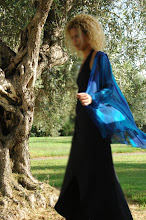
Galilee Silks continues the ON SALE Tallitot campaign...Have a look at our Tallis for women and Bat Mitzvah girls.


More than 50% off from their original price now at $99, our high quality prayer shawls make great gifts.


Pray in style with a Galilee Silks Tallit!

Sunday, January 24, 2010

Haiti prayers


A few years ago, I was in a small earthquake. Afterwards, the newspapers said it was a 4.5 earthquake.
During the 4.5 earthquake (or was it 4.6?), I was terrified. The earth and floor swayed almost 90 degrees -- three times.
I felt helpless during the small earthquake. It felt like the worst amusement park ride I'd ever been in (and this time, the earthquake wasn't man-made).
Our earth is very big and powerful. You don't feel how powerful the earth is until you are in an earthquake.
The Haitian earthquake was twice and one half stronger than the earthquake I experience. I can't imagine, and don't want to imagine the feeling of helplessness during the Haitian earthquake.
Then after the Haitian earthquake -- to see your house, your street, and your town destroyed. I don't want to imagine what the Haitian earthquake and its aftermath was like.
After I saw pictures of the destroyed Haitian parliament building, I could barely watch television or view Internet pictures of the devastation (I'm sorry to report). After I saw the picture of the bulldozer shoveling nameless bodies into an empty truck, I couldn't look at pictures of the Haitian earthquake for days (the pictures reminded me of the Holocaust during World War II).
Only when miraculous rescues were reported on the radio was I able to look at pictures from Haiti. I like to see firemen, and rescue crews saving someone.
I wish I were a doctor or a nurse and could volunteer to help Haitians, and see first hand the destruction by the earthquake. My hands want to do something for people but I'm not medically trained.
I pray for everyone killed, or displaced by the Haitian earthquake. I hope they will be strong enough to rebuild their lives.

Tuesday, January 12, 2010

Turtleneck accents for winter


Tutleneck or sweaters make sense during the cold winter months. As the winter continues, it becomes time to "jazz" up your sweater. How about a simple silk necklace to add some winter cheer to your wardrobe.

Galilee silks has more silk necklaces to choose from -- on our website:

http://www.galileesilks.com/index.php?cPath=30

Silk necklaces are different and can be part of your workday wardrobe. Thus, gold and silver jewelry can be used for special occasions.

Silk necklaces usually elicit comments from co-workers. Where did you get that? What a good idea -- a silk necklace. Silk is fancy but not ostentatious. A silk necklace is perfect for the work environment!

Silky smooth necklaces are appropriate for the winter season. Silk has the feel, and texture of snow and ice. Silk isn't cold like snow or ice. Silk makes me think of ice skating as I glide along the ice and the self-made wind blows. How about a matching silk scarf that we also sell at http://www.galileesilks.com/index.php?cPath=30

Wednesday, November 18, 2009

Woman wearing talit at Kotel detained

We do not think the woman in the picture is wearing a Galilee Silks Tallit, but still we thought this event of interest for our blog. If you are a woman who wants to wear a Tallit, we have a LARGE VARIETY of Womens Tallitot in our shop...
and now to the article

This article is from the Jerusalem Post

Nov. 18, 2009Matthew Wagner , THE JERUSALEM POST
Police and Western Wall officials expelled a female prayer group from the Kotel area and arrested one of the women after they attempted Wednesday morning to read from a Torah scroll.
"We debated amongst ourselves whether or not to read from the Torah at the Kotel itself or to take the Torah to the Robinson's Arch," said Nofrat Frenkel, who was arrested and later released by police.
"In the end we decided that because nobody seemed to mind we would go ahead and read the Torah at the Kotel."
According to a compromise reached two decades ago under Supreme Court mediation, it was agreed that women who wished to wear talitot [prayer shawls] and kippot and read from the Torah would be allowed to do so at the Robinson's Arch adjacent to the Kotel and not directly in front of the Kotel so as not to offend Orthodox visitors.
On every Rosh Hodesh (beginning of the Jewish month) the Women of the Wall conduct prayers at the Kotel and at the Robinson's Arch. On Wednesday's visit there was a contingent of women from North America who are in Israel to take part in a rabbinical ordination ceremony to take place at the Reform Movement's Hebrew Union College.
Frenkel said that as the women unrolled the Torah scroll and began to prepare to read, officials from the Kotel Foundation arrived and demanded that they leave the premises.
Frenkel said that the women agreed to roll up the Torah scroll and take it to the Robinson's Arch. But on their way out Frenkel, who was wearing a talit and was carrying the Torah, was seized by police.
"I was pushed into a nearby police station and transferred to the main police station at Yaffo Gate," she said.
About 40 women who attended the prayer formed a procession and followed the police and Frenkel through the Old City to the Yaffo Gate where they congregated and sang songs until Frenkel was released.
Rabbi Felicia Sol of the post-denominational Bnei Jeshrun Synagogue on Manhattan's Upper West Side, said that the attempt to read from the Torah was an experiment with "pushing the boundaries".
"It is ridiculous that in a Jewish state that is supposedly democratic women cannot pray the way they want to and only one definition of Judaism is accepted," said Sol.
"It is sad that many secular Israelis are distanced from Judaism because in Israel religion is seen as a negative, divisive force instead of being compelling and meaningful."
Anat Hoffman, Chair of the Women of the Wall, said that the two-decade-old compromise that prevents women from reading from the Torah at the Kotel was outdated.
"Times have changed and women should be allowed to have a more central role in Jewish expression," said Hoffman.
Kotel Rabbi Shmuel Rabinovitz said in response that the women's actions were "a desecration of the sacred."
"They brought dissent and infighting to a place that is supposed to symbolize unity," said Rabinovitz. "And that is a desecration. They behaved like [biblical] Korah and his assembly."
Rabinovitz added that the women were motivated by a political agenda and did not want to simply pray.
However, Frenkel, who belongs to a Conservative congregation in Israel, said that her sole intention was to pray to God.
"We were not trying to cause a provocation," said Frenkel.
"I am not a political person. I come to pray and perform what is written in the Torah 'Speak to the Israelites and tell them to make tzitzit on the corners of their garments'", said Frenkel referring the biblical verse that teaches the commandment to wear a talit.
Jerusalem Police said that they arrested a woman from after she donned a talit, while praying at the Western Wall.
According to a police spokesman, the woman was approached by officers after putting the prayer shawl on, which police said caused an outcry from other worshippers.
"Police calmed the situation down, and took the woman in for questioning," a statement from the spokesman said.
Abe Selig contributed to this story
This article can also be read at http://www.jpost.com/servlet/Satellite?cid=1258489193200&pagename=JPArticle%2FShowFull[ Back to the Article ]

Wednesday, August 26, 2009

Tallit on Knol


The Tallit - Jewish prayer shawl - is a commemoration of a kind of wrap that was worn by our forefathers. After the Exile, they adopted the custom of the neighboring Bedouins of wearing it as protection from the sun, and the Tallit became an every day garment.
Read more on the Google Knol project

Sunday, August 10, 2008

Celebrate the Days of Awe


Order now for the High Holy Days your Tallit from our new Galilee Silks Judaica Gift store with more than 150 Tallitot for Men and boys, women and girls!

Classic or modern Tallitot from the Land of Israel, a beautiful gift for family and loved ones.

Tuesday, April 1, 2008

A Thread of Blue

This is a wonderful in depth teaching about the Tallit by Rabbi Fred Davidow

Blue has been a distinctive color of Judaism since Biblical times. In the Torah God commands the Israelites to wear a garment with fringes at each corner and to attach a blue thread to the fringes (Numbers 15:37-38). The blue dye used to color the wool came from the gland of a snail that lived in shallow waters off the coast of northern Israel.
It was the world’s most costly dye, since it took 12,000 snails to yield 1.4 grams of dye. The high cost of this dye is the reason why this bluish-purplish color became associated with royalty. Eventually the secret process of manufacturing the dye was lost or the snails were driven close to extinction by human rapacity.


The blue thread disappeared from the fringes but the color remained on the tallit as blue stripes. Hence we see on the flag of the State of Israel two broad blue stripes.
The tallit is worn only at Shacharit, the morning service, because the Torah states at Numbers 15:39 that, “it shall be to you a tassel to look upon and remember all the commandments of the Eternal.” The verbal phrase in the Hebrew text is u-r’item oto, which literally means, “you shall see it”. At dusk and during the night in the poorly lit homes and synagogues of ancient times it was virtually impossible to discern the color of the blue thread. Thus the commandment to see the blue thread could only be fulfilled in sunlight.


In traditional Judaism the observance of many rituals is determined by a specific time. The time to recite the Shema section of the liturgy in the morning is determined by the break of dawn, when the natural light of the sun returns. The Torah paragraph containing the commandment of the fringes with the blue thread is included within this Shema section of the siddur. The Talmud records a discussion among rabbis who were debating the question: How do we know when the night ends and the new day begins so that we can recite the Shema for the morning service? In the Mishnah Berakhot 1:2, Rabbi Eliezer says: "The night ends and the new day begins when you can tell the difference between a blue thread and a purple thread.” Rabbi Eliezer is saying that the proper time for the performance of the ritual of putting on the tallit is when there is sufficient light to distinguish between two colors next to each other on the spectrum. Thus halakhah (Jewish law) rules that we wear the tallit only at Shacharit, the morning service. Halakhah is developed by the “left brain” through the use of logic and analysis.
Aggadah (legend, lore), which taps into the “right brain” for feelings, presents ideas that speak to our hearts and motivate us to fulfill the moral values of Judaism. Here is an aggadic treatment of the question of when is the proper time to recite the morning Shema. In the Talmud, Berakhot 9b, a question is asked, “How do we know when the night ends and the new day begins? The answer supplied is: The night ends and the day begins at the time when one can see his friend from four feet away and recognize him.” This is the “right-brain” solution. This means more than being able to discern the color in the eyes of your friend. It points to the need to recognize in the face of your friend another soul created in the image of God and to treat that soul in a godlike way.

When people get stuck in bad attitudes, they are figuratively living in darkness. When the bad attitude gets broken, only then can a person see clearly and move toward recognizing and affirming his/her friends. We all need to see the faces of our friends and treat them with respect.