Tuesday, January 12, 2010

Turtleneck accents for winter


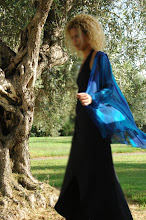
Tutleneck or sweaters make sense during the cold winter months. As the winter continues, it becomes time to "jazz" up your sweater. How about a simple silk necklace to add some winter cheer to your wardrobe.

Galilee silks has more silk necklaces to choose from -- on our website:

http://www.galileesilks.com/index.php?cPath=30

Silk necklaces are different and can be part of your workday wardrobe. Thus, gold and silver jewelry can be used for special occasions.

Silk necklaces usually elicit comments from co-workers. Where did you get that? What a good idea -- a silk necklace. Silk is fancy but not ostentatious. A silk necklace is perfect for the work environment!

Silky smooth necklaces are appropriate for the winter season. Silk has the feel, and texture of snow and ice. Silk isn't cold like snow or ice. Silk makes me think of ice skating as I glide along the ice and the self-made wind blows. How about a matching silk scarf that we also sell at http://www.galileesilks.com/index.php?cPath=30

Sunday, January 3, 2010

Last weeks torah portion...

Last weeks torah portion or parasha was extremely important to me because of my aging mother. We had an argument over my direction. Why are we arguing now? It hurts that we argue, at all, nowadays. Why can't life always be sunny?

In this week’s parsha, we find the last of the three patriarchs, Jacob (who has already adopted the name of Israel), on his deathbed. As he readies himself for his passing, he calls upon his sons to ‘bless’ each of them in order to prepare them to carry on leading what is to become the holy nation of Israel.

Several of these ‘blessings’, however, can hardly be considered blessings at all. In fact, Jacob takes this opportunity to reproach some of his sons for their past wrongdoings (most notably, his rebuke of Shimon and Levi for their vengeful massacre of the city of Shechem (Gen. 49:7)). Others, that he does not rebuke directly, receive ‘blessings’ that merely state parts of their character – who they were or what they did. Are we to consider statements of character and criticism of past actions blessings at all? Furthermore, how do Jacob’s final words to his sons prepare them to lead and shape the nation?
Shprintza Herskovitz, through her use of the Ohr HaChaim commentary on this week’s parsha, gives insight to these questions:
“The commentary Ohr HaChaim (R. Chaim Atter) explains why Yaakov rebuked his sons for the negative things that they did. Ohr HaChaim says that by mentioning their deeds, Yaakov was telling his sons that had had to take responsibility for them. R. Attar goes even further to say that sometimes the rebuke itself is a blessing because it makes a person aware of his or her responsibility. Once a person is aware of his responsibility he can then correct or improve his actions, which can then result in increased blessing” (Rays of the Sun, p. 106).
This is to say that the blessing inherent in the criticism offered to each of his sons exists in that it gives each the ability to examine himself and choose to take responsibility for his actions. The ability to choose ‘good’ and to shape a better world that the awareness presents is held in such high regard that it is, in itself, considered the blessing and, therefore, divine.
Further, the blessing of the choice to create a more ideal world is in itself what helps to shape Israel as a holy nation. Through the classic literature, we do not find that our forefathers were inherently good people. Rather, we find that many of them were regular people with evil inclinations who were continuously presented with the choice to take responsibility for their actions and for the world around them.

The German-Jewish Sociologist Erich Fromm elaborated on this point in his own interpretation of the Old Testament:
“That the Bible does not refrain from acknowledging the evil in man becomes quite clear in its descriptions of even its most important personalities. Adam is a coward; Cain is irresponsible; Noah is a weakling; Abraham allows his wife to be violated because of his fear; Jacob participates in the fraud against his brother Esau; Joseph is an ambitious manipulator; and the greatest of Hebrew heroes, King David, commits unforgivable crimes.
Does all this not imply that the biblical view of man is that his essence is evil, that man is essentially corrupt? This interpretation cannot stand against the fact that, while the Bible acknowledges the fact of man’s ‘evil imaginings,’ it also believes in his inherent capacity for good… Man, in the biblical and post-biblical view, is given the choice between his ‘good and evil drives.’”

On his deathbed, Jacob attempts to give his sons the choice of responsibility towards good and thereby develop the foundation for Israel as a holy nation. The holiness is to stem from the ability to self-examine and self-criticize as a nation – and the subsequent choice to shape the world for the better.

Today, we must examine the extent to which the nation of Israel has lived up to its classification as a holy nation. Are we aware enough of the impact that our actions have on the world and people around us? We live in a world where the individualist mentality rules and only small minorities are brave and willing enough to pay attention to their affects on others – brave and willing enough to strive towards a better world. Is Israel a part of those few or are we merely another of the world’s nations acting in the interest of the elites without regard or even awareness of others? If we are, as a nation, to strive towards holiness and good, then we must examine these questions, self-criticize, and develop our ability to choose our responsibility in the world. Through this self-examination, we would be blessed.
Shabbat Shalom.


http://hechalutz.org/2.1/parashat-hashavua.html

Sunday, December 27, 2009

Winter is a spiritual time of year for me.


Winter is a spiritual time of year for me.

Indoors all the time with lots of time to think about the future.

To think well -- I need to stay warm especially around the neck area.

I don't want to catch the flu so I need a beautiful new scarf from http://www.galileesilkjudaica.com/ with Jerusalem hand painted on it.


We also have georgeous talitot, and other beautiful items for your prayers.

Sunday, December 20, 2009

Hannukah miracle


Do Hannukah miracles have to be spectacular? Or can Hannukah miracles be the simple things?

My Hannukah, this year, was a miracle of simple things -- a new Hannukiah (candelabra), family togetherness, continuity, and some simple new winter garments. Aren't those things miracles too?

Galilee Silks offers garments, and accessories that are not simple. Our garments are modern, fashionable, and stylish. An addition to anyones wardrobe.

From indoor winter scarves to indoor tableclothes to woolen talitot -- Galilee Silks offers Jewish silk fashion for your indoor winter life with your family and friends during the cold season. Each or our items in our catalog are indoor miracles!

As always, Galilee Silks continues to offer traditional Jewish -- wedding, bar mitvah, bat mitvah, shabbat, Pesach, and other holiday items used throughout the Jewish year. Please, browse our full catalog, here.

Miracles come in small packages. Galilee Silks is proud to present our miracle traditional and winter items for your family.

Wednesday, December 16, 2009

A Tallit to keep you [spiritually] warm


We found a great blog which explains all about Galilee Silks most popular marketed garment:


The Talit. We especcialy liked the following post about blessing the Tallis


The Jews do not believe in the blessing of their garments and ornaments by their Rabbi, or the Jew’s religious teacher or master. This is significantly different from other religions, particularly Catholicism, which practices the blessing of items, from those related to their religious practice (such as the Bible) to other items and material possessions. This applies to the use of their tallit or their prayer shawl. The tallitot are not blessed by the Rabbi, although Jews can get such prayer shawls at the synagogue before praying. Because of this, one can buy tallilot anywhere.
However, the Jews do believe that they themselves should bless their tallits. This is a form of their respect to this sacred garment. This practice is actually included in their mitzvah, hence the importance they place on the prayer shawl. Although it is the tzitzit (or the fringes on the prayer shawl) and not the tallit that the Jews are required to wear, it still plays a pivotal role in their religious practice. So it is not surprising that the Jews take the effort to say a prayer or a blessing before wearing the tallit or the prayer shawl.
The blessings are done every time one uses the tallit. First, one takes his or her tallit from the tallit bag, unfolds the prayer shawl carefully, and recites a blessing, which, in essence, acknowledges God who sanctifies His people with the commandments and commands them regarding the use of the tzitzit. After which, one puts the tallit or the tallis on and recites a prayer similar to the first one, although it cites the commandment of wrapping one’s selves in the tzitzit. The second prayer is written on the atarah of the tallit or tallis.
After the tallit has been worn and the prayer has been said, one should then kiss the atarah’s end (or where the last word of the said prayer is embroidered). He or she then kisses the beginning of the atarah (or where the first word of the prater is embroidered). The individual should then wrap the prayer shawl around his or her shoulders, holding the tallit over the head for a brief moment of meditation. At this point, praying a verse of the book of Psalms can be done, although this is not required.
There are a number of rules regarding the reciting of prayer after wearing the tallit. If the person removes a particular tallit and uses a new one, he is required to say the blessing again. The same applies when the person removes the tallit without the intention of praying and using the tallit again. However, if he or she removes it with the intention of putting it back on, this individual can wear the tallit without reciting the blessing.


Not to mention we warmly recommend you to visit our own online Galilee Silks stores and look at our beautiful Jewish prayer Shawls! Happy Hanukkah!!

Wednesday, November 18, 2009

Woman wearing talit at Kotel detained

We do not think the woman in the picture is wearing a Galilee Silks Tallit, but still we thought this event of interest for our blog. If you are a woman who wants to wear a Tallit, we have a LARGE VARIETY of Womens Tallitot in our shop...
and now to the article

This article is from the Jerusalem Post

Nov. 18, 2009Matthew Wagner , THE JERUSALEM POST
Police and Western Wall officials expelled a female prayer group from the Kotel area and arrested one of the women after they attempted Wednesday morning to read from a Torah scroll.
"We debated amongst ourselves whether or not to read from the Torah at the Kotel itself or to take the Torah to the Robinson's Arch," said Nofrat Frenkel, who was arrested and later released by police.
"In the end we decided that because nobody seemed to mind we would go ahead and read the Torah at the Kotel."
According to a compromise reached two decades ago under Supreme Court mediation, it was agreed that women who wished to wear talitot [prayer shawls] and kippot and read from the Torah would be allowed to do so at the Robinson's Arch adjacent to the Kotel and not directly in front of the Kotel so as not to offend Orthodox visitors.
On every Rosh Hodesh (beginning of the Jewish month) the Women of the Wall conduct prayers at the Kotel and at the Robinson's Arch. On Wednesday's visit there was a contingent of women from North America who are in Israel to take part in a rabbinical ordination ceremony to take place at the Reform Movement's Hebrew Union College.
Frenkel said that as the women unrolled the Torah scroll and began to prepare to read, officials from the Kotel Foundation arrived and demanded that they leave the premises.
Frenkel said that the women agreed to roll up the Torah scroll and take it to the Robinson's Arch. But on their way out Frenkel, who was wearing a talit and was carrying the Torah, was seized by police.
"I was pushed into a nearby police station and transferred to the main police station at Yaffo Gate," she said.
About 40 women who attended the prayer formed a procession and followed the police and Frenkel through the Old City to the Yaffo Gate where they congregated and sang songs until Frenkel was released.
Rabbi Felicia Sol of the post-denominational Bnei Jeshrun Synagogue on Manhattan's Upper West Side, said that the attempt to read from the Torah was an experiment with "pushing the boundaries".
"It is ridiculous that in a Jewish state that is supposedly democratic women cannot pray the way they want to and only one definition of Judaism is accepted," said Sol.
"It is sad that many secular Israelis are distanced from Judaism because in Israel religion is seen as a negative, divisive force instead of being compelling and meaningful."
Anat Hoffman, Chair of the Women of the Wall, said that the two-decade-old compromise that prevents women from reading from the Torah at the Kotel was outdated.
"Times have changed and women should be allowed to have a more central role in Jewish expression," said Hoffman.
Kotel Rabbi Shmuel Rabinovitz said in response that the women's actions were "a desecration of the sacred."
"They brought dissent and infighting to a place that is supposed to symbolize unity," said Rabinovitz. "And that is a desecration. They behaved like [biblical] Korah and his assembly."
Rabinovitz added that the women were motivated by a political agenda and did not want to simply pray.
However, Frenkel, who belongs to a Conservative congregation in Israel, said that her sole intention was to pray to God.
"We were not trying to cause a provocation," said Frenkel.
"I am not a political person. I come to pray and perform what is written in the Torah 'Speak to the Israelites and tell them to make tzitzit on the corners of their garments'", said Frenkel referring the biblical verse that teaches the commandment to wear a talit.
Jerusalem Police said that they arrested a woman from after she donned a talit, while praying at the Western Wall.
According to a police spokesman, the woman was approached by officers after putting the prayer shawl on, which police said caused an outcry from other worshippers.
"Police calmed the situation down, and took the woman in for questioning," a statement from the spokesman said.
Abe Selig contributed to this story
This article can also be read at http://www.jpost.com/servlet/Satellite?cid=1258489193200&pagename=JPArticle%2FShowFull[ Back to the Article ]

Sunday, November 15, 2009

Is 13 an Adult? About Bar Mitzvah


Galilee Silks found on the web this interesting part of an article on http://www.jewfaq.org/barmitz.htm

Quote:

"Many people mock the idea that a 12 or 13 year old child is an adult, claiming that it is an outdated notion based on the needs of an agricultural society. This criticism comes from a misunderstanding of the significance of becoming a bar mitzvah.

Bar mitzvah is not about being a full adult in every sense of the word, ready to marry, go out on your own, earn a living and raise children. The Talmud makes this abundantly clear. In Pirkei Avot, it is said that while 13 is the proper age for fulfillment of the Commandments, 18 is the proper age for marriage and 20 is the proper age for earning a livelihood. Elsewhere in the Talmud, the proper age for marriage is said to be 16-24.

Bar mitzvah is simply the age when a person is held responsible for his actions and minimally qualified to marry. If you compare this to secular law, you will find that it is not so very far from our modern notions of a child's maturity. In Anglo-American common law, a child of the age of 14 is old enough to assume many of the responsibilities of an adult, including minimal criminal liability. Under United States law, 14 is the minimum age of employment for most occupations (though working hours are limited so as not to interfere with school). In many states, a fourteen year old can marry with parental consent. Children of any age are permitted to testify in court, and children over the age of 14 are permitted to have significant input into custody decisions in cases of divorce. Certainly, a 13-year-old child is capable of knowing the difference between right and wrong and of being held responsible for his actions, and that is all it really means to become a bar mitzvah. "

Then the article goes on about giving Bar Mitzvah gifts...


There is where galilee Silks comes in, we have the perfect Br Motzvah or Bat Mitsva gift: a Tallit!

Galilee Silks Tallitot are appreciated greatly by the people who obtained one. We see this from the many enthousiastic response emails we receive from grandparents or parents who sometimes together with the br Mitzvah boy or the Bat Mitzvah girl, or without them make their choice from our online shops.

Do not forget our Tallitot on SALE! We invite you warmly!